
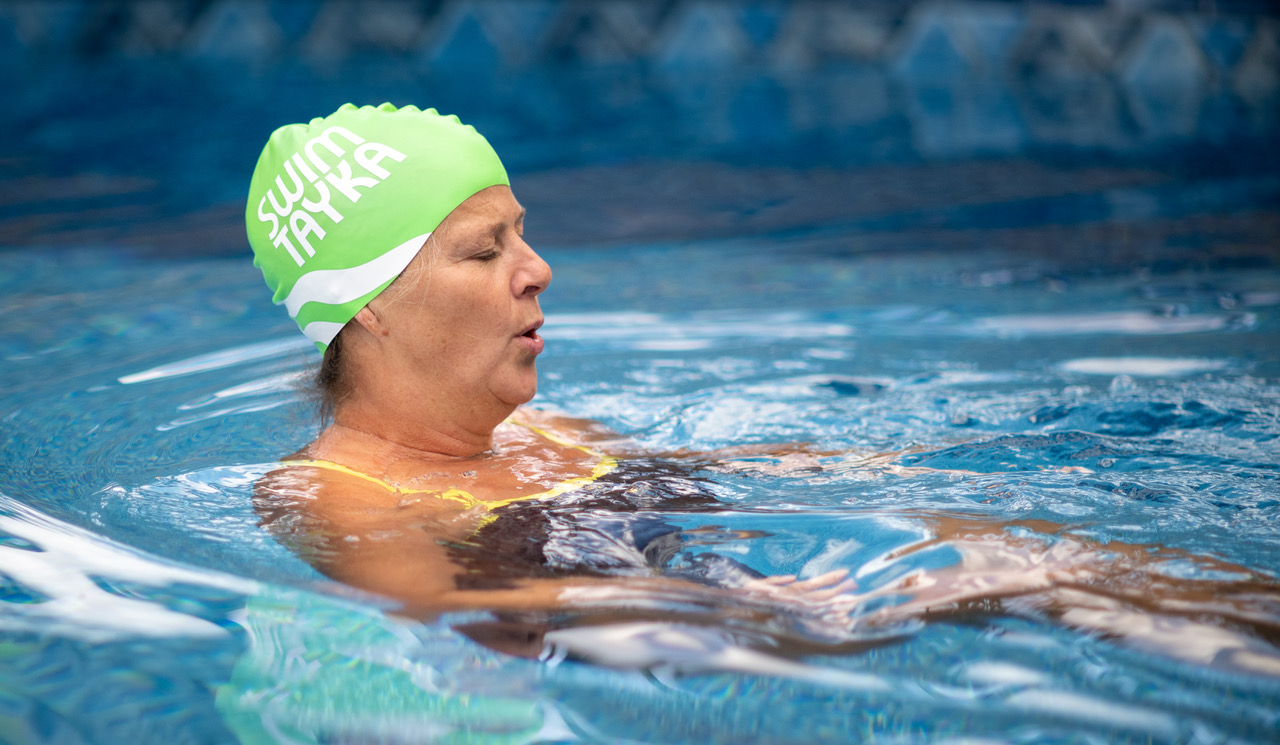
In the world of open water swimming, crossing the English Channel — roughly 40 km of cold water, jellyfish, waves, wind, and shipping lanes between Dover, England, and Cap Gris-Nez, France — ranks among the sport’s most demanding feats.
Teresa Seibel, a Kamloops-based adult swimming coach, hopes her planned attempt in early June will place her among a group of channel swimming finishers that is smaller than the number of people who have climbed Mount Everest.
“I came to swimming the English Channel in the same way for runners a 10K becomes a marathon, which becomes an Iron Man,” Seibel said. “It’s a natural progression, at least in my circle.”
The path to this point took two years, many kilometres of ocean swimming, an ACL tear, three months on crutches, and a decision after her sister was diagnosed with a serious illness to push ahead no matter what.
Seibel and four teammates have booked “first-off-the-tide” in Dover for a June 3 to 11 swim window. Depending on weather conditions, they could be in the water at 1 a.m. to begin a 15- to 18-hour passage.
Now 55-years-old, Seibel only learned to swim as an adult. After running half marathons and full marathons and deciding that a triathlon was the next step, she and some friends went to the pool at the Vancouver Aquatic Centre. They realized they could not finish a length.
But she turned to “Total Immersion” swimming, a methodology developed by American coach Terry Laughlin in the 1980s. It teaches that most recreational swimmers waste energy fighting the water rather than moving through it efficiently. The system trains drag reduction and body position rather than stroke power or fitness.
With that, Seibel completed her first Ironman triathlon in 2005, finishing the 3.8-kilometre swim leg well under the required time cutoff. She recognized something in that result, that fear of or reluctance to swim needlessly keeps many people from competing in triathlons. She built a business, Tri Balance, around teaching them and has been doing it in Kamloops since.
“I knew there were a million people out there like me — adults who couldn’t swim,” she said.
After a couple more Ironman competitions and other events, Seibel said she was looking for new challenges. Two years ago, a client at a swim training camp mentioned she intended to swim the channel and was looking for teammates. A week later, Seibel had a new adventure.
The Channel relay format has strict rules. It puts four to six swimmers on a small boat together for the entire passage, rotating into the water for swimming in one-hour shifts. Teams follow an S-shaped path through the tides. A swimmer might cover two km in one shift if the current works against them, or six km if it carries them.
About 40 percent of attempts don’t finish due to bad weather, rules violations such as improperly touching the guide boat, or running out of time. Seibel said she expects every person on her team will swim three or four shifts before they reach France.
Acclimatizing to cold water has been one of the hardest aspects of training. The channel will be 14 to 16C in June, and swimmers are not allowed to wear wetsuits. She’s been dipping daily in her small backyard pool, which has hovered around 12C since she opened it in mid-April, working to increase the time she can spend in the water.
Last June, during a prep camp in Dover, Seibel “tweaked” her knee. In July, her knee swelled massively while she was resting at home, resulting in an ambulance trip to the emergency room to have blood drained. In August, an MRI confirmed a full ACL rupture. Three months on crutches followed. She kept training in the pool with a pull buoy between her knees and was back on the spin bike early this year to build leg strength.
Through the same time, her sister was diagnosed with cancer, and Seibel found herself again questioning whether she could hold it together and get to June. She decided she needed to push through and do all she could to complete this swim.
“Her diagnosis reaffirmed my choice to swim to live life to its fullest,” she said. «The skills you build doing these things — the discipline, the tolerance for uncertainty, the ability to push through — they carry over.
“That I could commit to something for two years and see it through is what this is about.”
Her team, the Salish Sea Sisters (find them on Facebook), is raising money for a UK charity called Swim Takya that teaches underprivileged children to swim. A 24-hour relay swim she participated in at Comox last September served as both a rehearsal and a fundraiser for the charity.
What she expects to bring home from Dover is more meaningful than a recorded time, a trophy or a medal.
“The event itself is amazing, but what I’ll carry longest are the connections. These women — the group chats we have, the weekend training trips, the planning — that’s already the thing. We are so prepared. The swim is where it lands.”
Submitted by Robert Koopmans