
The work of corrections officer Anthony Martin, also the BC Pen’s historian, is on display in Kamloops
Visitors to the Old Courthouse in Kamloops are greeted to an important exhibit of artifacts and archives on the history of the BC Penitentiary with a diorama of the building, before they are guided to the lower floor. The exhibit represents a collaboration of Connective (formerly the John Howard Society), the City of Kamloops, and the Kamloops Museum and Archives.
Brought together by professors Peter and Jennifer Murphy of Thompson Rivers University and federal corrections officer Anthony Martin, the exhibit is a permanent collection of the history of the penitentiary that includes a great variety of objects, including a recreation of the warden’s office, based on that of long-serving Warden William Meighen from 1935 to 1946, which incorporates items made by prisoners. As well, on exhibit there is a great assemblage of artwork and crafts by prisoners, photographs of the penitentiary, a timeline of the institution’s history, written material and also a website which includes a video interview with Anthony Martin and copy of his memoir, Life at the BC Penitentiary (with copies for sale at the Arts Council office). One very unique item on display is a prisoner-made tattoo gun in a hollowed-out library book.
The BC Penitentiary was a notorious institution over its 102 years of operation, especially in its later years. Corporal punishment in its early decades involved flogging, working on a chain gang, restrictive diets and solitary confinement. There were only two hangings for murder, one by a Joseph Smith in 1913 for killing a guard.
The Sons of Freedom sect of Doukhobors, a pacifist group opposed to many Canadian laws, were frequently arrested for their protests involving acts of nudity and arson. A separate prison was created for them in the 1930s on Piers Island in the Strait of Georgia which helped alleviate the growing overcrowding at the Pen.
By the 1950s there was a maximum of over 760 prisoners. Many were transferred to other institutions so that by the mid-1960s, the inmate population had been reduced to 500. But in the final years there were a series of disturbances and hostage takings that marred the penitentiary.
There were riots in 1934, 1963, 1973, a hostage-taking in 1975 involving Mary Steinhauser, a Correctional Service of Canada employee, and, the following year, the largest incident of all when inmates destroyed most of the cellblocks. Four years later in 1980, the BC Pen was decommissioned.
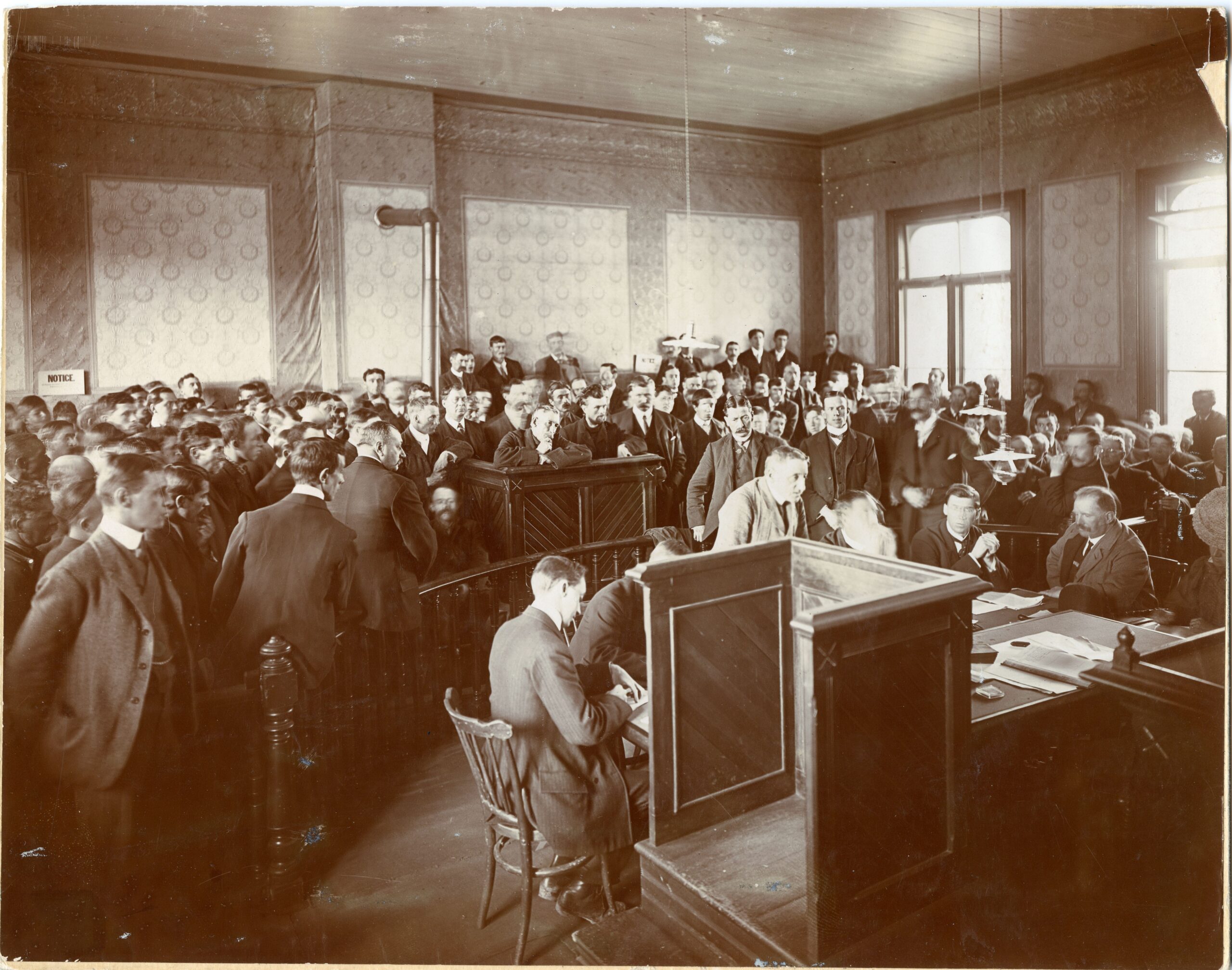
Anthony Martin was a CSC corrections officer (1958-1980) who was acknowledged as the historian of the BC Penitentiary. He became the internal auditor of the “close-out” team of the BC Pen. When he retired in 1993 the collection of artifacts and archives was transferred to his home in Abbotsford. TRU English professor Peter Murphy, when he taught in the SFU prison education program, met Martin and suggested the Old Courthouse in Kamloops could become a permanent home for the collection. Murphy became part of a steering committee with the late historian Peter Grauer, well-known for his definitive (2006) book on Bill Miner, Interred With Their Bones: Bill Miner in Canada 1903-1907. Train robber Miner is an Inescapable part of the exhibit from the story of his capture after a botched robbery near Kamloops in 1906, to his trial (in the previous courthouse to this one), and incarceration in the BC Penitentiary in New Westminster from which he escaped in 1907.
The exhibit as a whole is intended to “stimulate community dialogue around a whole series of important issues relating to prisons and social justice policies.” Coming this September, an event is planned to include a showing of the 1982 film The Grey Fox about Bill Miner, and two lectures, one highlighting the collection, another on the theme of social justice. The Anthony Martin BC Penitentiary Collection exhibit is open to the public daily from Tuesday through Saturday, 10 a.m. to 4 p.m.
Submitted by Ken Favrholdt