
Glenn Hilke was arrested in front of city hall on Monday, Dec. 19. The longtime social advocate said he was handcuffed, placed in the back of a police vehicle, strip-searched, and jailed before being released without charge.
Hilke, as part of a new volunteer-driven group called NOMADS, had set up a drop-in centre in front of city hall. He said the group, of about 10 volunteers, was there to provide food, drinks, and winter clothing to those in need.
The group said the event was held in a calm and respectful manner and was only intended to be up for two hours in total. Hilke said the police came after about an hour.
NOMADS has been holding pop-up drop-in services since November, with about three dozen volunteers handing out food and drink, clothing, personal hygiene items, while also offering “a good conversation, maybe about connecting to services,” Hilke said.
But city hall as a location was a first for the group, and a considered one.
“We feel the city has as much of a responsibility as the province to provide this service,” Hilke told the Chronicle.
Hilke said the city receives funding through the federal government’s Reaching Home program, which offers grants to prevent and reduce homelessness.
“I’m not talking about the city becoming an operator of the service. … But it’s not just up to the province, as some councillors believe, and the mayor, to be responsible for that,” he said.
The date wasn’t a coincidence, either. Hilke said Dec. 19 marked the 500th day in Kamloops without a permanent day space.
Hilke previously operated The Loop, a drop-in centre at 405 Tranquille Rd. It was shuttered after being purchased by a local realtor in August 2024, which he said left a “significant gap” in basic services.
Ten days prior to Hilke’s arrest, Coun. Dale Bass called on the provincial government to fund a permanent indoor year-round day space in the city — a request previously made by letter in June 2024, to which council received no reply.
In her motion, Bass noted a 229 percent increase in the point-in-time count over the past decade and called the matter a “long-term escalating crisis.”
Bass cited last year’s homeless point-in-time count, which found 313 individuals on the streets over a two-day period in October. The results of the 2025 point-in-time count are expected to be received by council this month.
A permanent day space, Bass said, would help connect people to housing and support services and relieve frontline workers, first responders, and emergency services.
Mayor Reid Hamer-Jackson was the sole vote against sending a follow-up letter, saying he needed time to analyze the motion, which Coun. Nancy Bepple noted only contained previous reports that had come before council and did not present new information.
But with nearly all of council on board and advocacy abound, why has no permanent day space emerged?
“It has always been a question of location,” Hilke said.
Hilke said “special interest lobby groups” are dictating to the city where such a centre could be located, pointing to a list of conditions created by the North Shore Business Improvement Association (NSBIA), as one example.
In 2024, the NSBIA said it would only support new social programming that fit its set of criteria, which includes not being placed on commercial corridors.
“If the location will be nowhere near where it needs to be, other services, the hospital… a supermarket, even, you are fostering a mentality, as well as a perception, that the folks who are actively suffering right now from this lack of services, as being responsible for the problems of the city. You’re criminalizing them,” he said.
Hilke said any delay to solving the problem is only causing further agitation to the community as a whole.
“I have literally found people inside dumpsters trying to stay warm. Where is this? This could be, you know, one of the most treacherous, dangerous, poorest cities in the world — those are the optics. We’re OK to accept that?” he said.
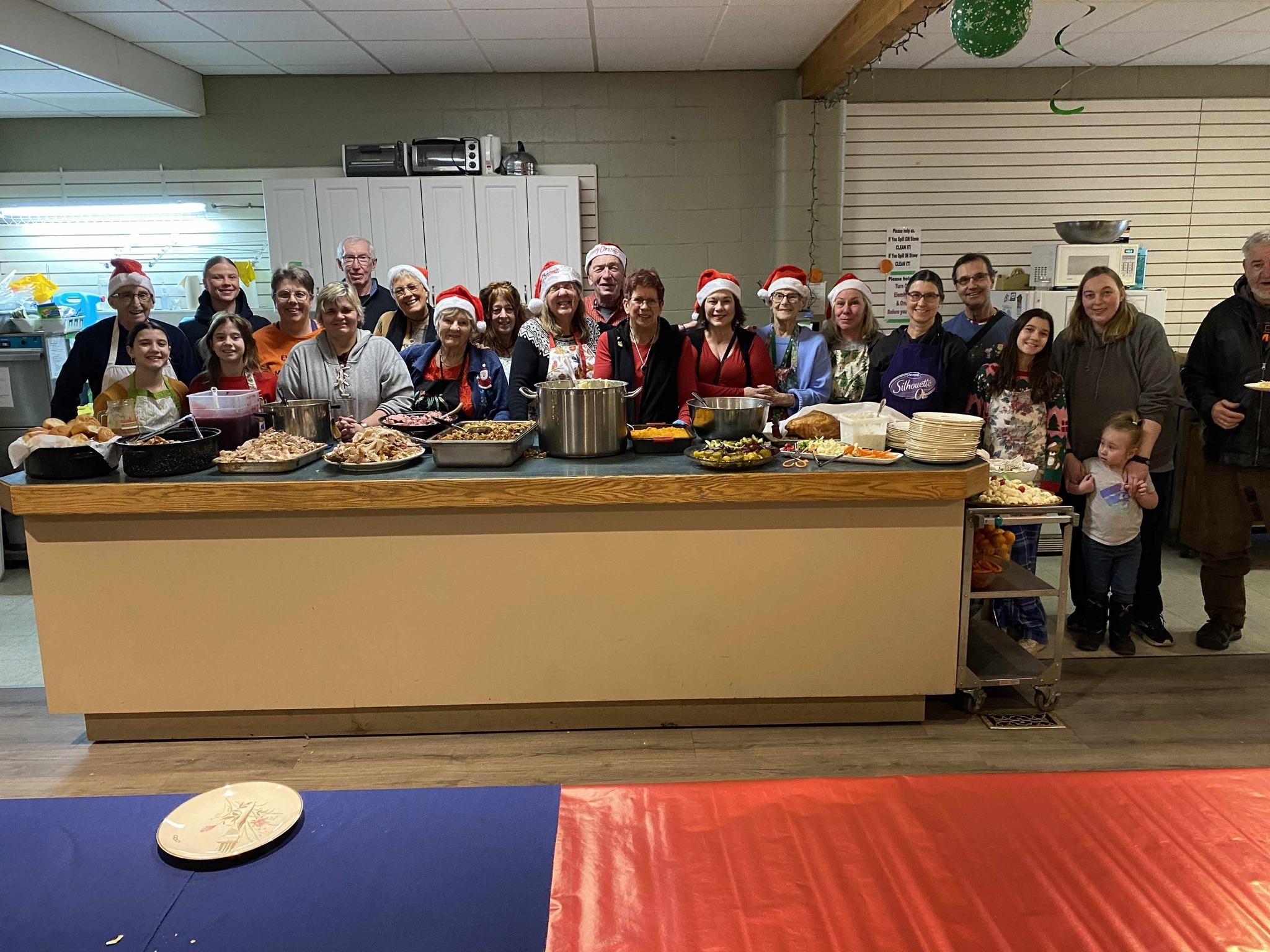
NOMADs hosted a Christmas dinner at the Odd Fellows Hall on Tranquille Road on Dec. 23, not far from The Loop’s former location.
Hilke said he saw many familiar faces.
“It’s great to see those folks, but on the other hand it’s sad to see that, after a year and a half, there are still people in the same situation, without enough support to make the positive change they want and need.”